Case Studies
Every Deal Here Was Sourced the Same Way.
Public record, a filter that reads as intent rather than demographics, and direct multichannel outreach. We call it High-Probability Prospecting, and TektonScale is that system, pointed at your market. The four deals written up below total $11.5M in transactions and $521,900 in fees. The track record behind them is over $100 million in investment sales personally closed and $250M+ in aggregate sales volume annually for my sales teams.
The system behind the numbers — live, operating results
Commercial Real Estate · Middle Market Investment Sales
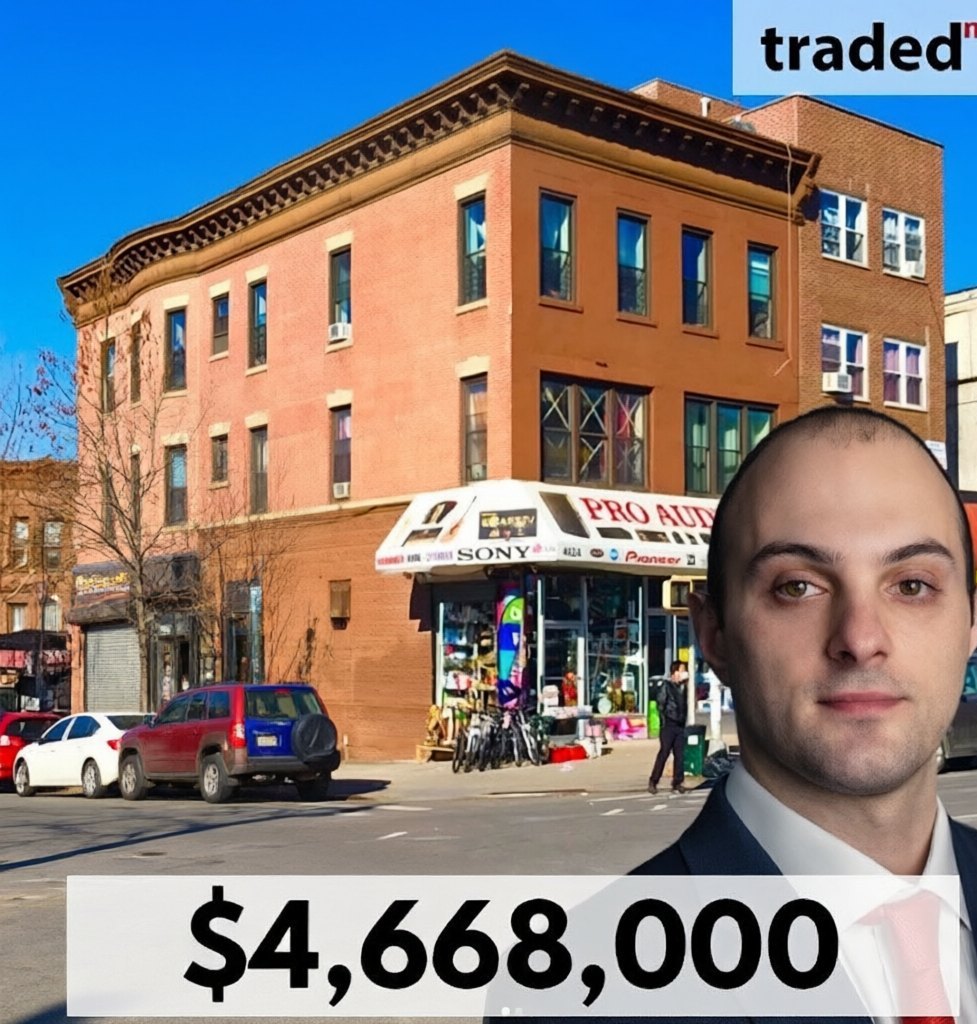
$4,668,000 Two-Building Portfolio and a $233,400 Commission, Sourced From a Cold List
The Market
Middle market free market mixed-use buildings in Brooklyn, on prime retail corridors.
The Problem
New York City runs at a one to two percent annual turnover rate. It's a legacy market where owners hold for thirty years or more, so sale velocity is extremely low. And we were going after the most in-demand asset class in the most competitive investment sales landscape in the country.
The list can't just be owners. It has to be owners who are actually likely to sell.
The Approach
The Result
Two buildings, 9,000 square feet, sold at a blended $516 per square foot and a 4.1% day one cap rate, with a number of open violations.
Why It Worked
In a market with holding periods this long, volume alone gets you nowhere. Fifteen years of ownership, a free market asset and an absentee owner are three independent signals that someone is closer to selling than the market average. Stacking them turns a one percent turnover rate into a list worth working.
That's high probability prospecting, and in a legacy market it's the only kind that produces deals.
Commercial Real Estate · Middle Market Investment Sales
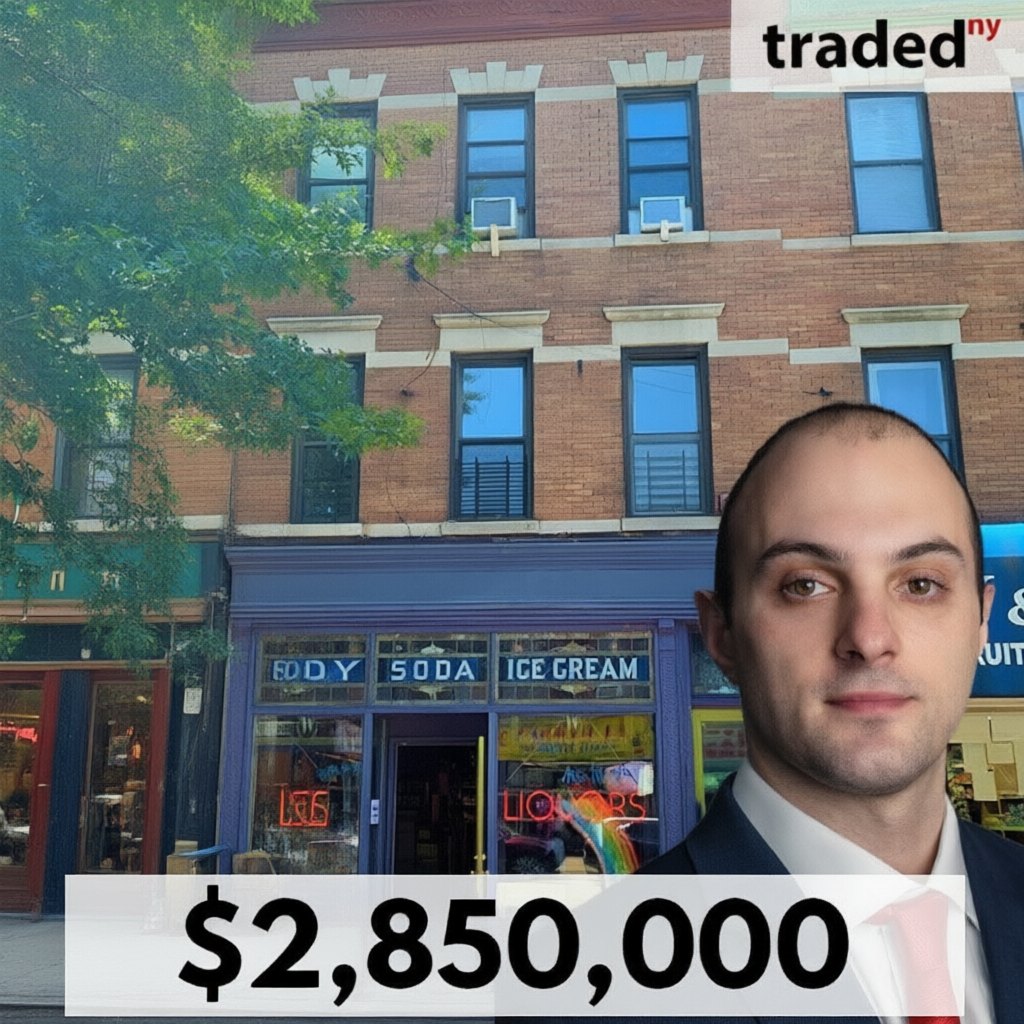
$2,850,000 on One of the Most Tightly Held Blocks in Brooklyn
The Market
Free market mixed-use on Prospect Park West, on the border of Park Slope and Windsor Terrace. Two apartments over one store, directly on Prospect Park and one of the best blocks in Brooklyn.
The Problem
New York City runs at a one to two percent annual turnover rate, with owners holding for thirty years or more. On a block like this one it's lower still, because there's no reason to ever sell.
The list can't just be owners. It has to be owners who are actually likely to sell.
The Approach
The Result
3,300 square feet on one of the strongest blocks in Brooklyn, sold at $863 per square foot.
Why It Worked
The better the block, the less reason anyone has to sell, so the usual approach of working a farm and waiting produces nothing. Twenty-five years of ownership and an out-of-borough owner are two signals that someone is closer to a decision than the market average, and on a block this tightly held those are the only owners worth contacting.
That's high probability prospecting, and in a legacy market it's the only kind that produces deals.
Commercial Real Estate · Middle Market Investment Sales
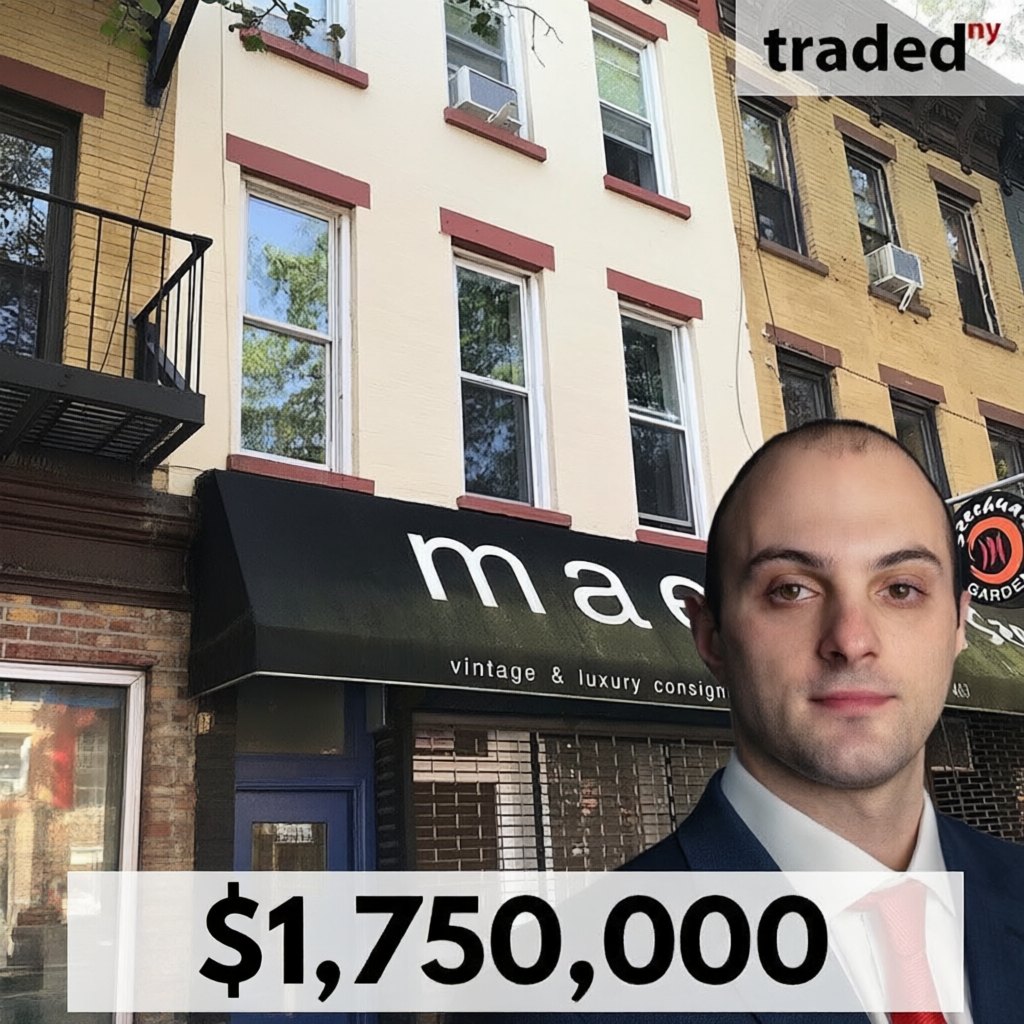
$1,750,000 for a 16-Foot-Wide Building Most Brokers Would Have Discounted
The Market
Free market mixed-use on Seventh Avenue in Park Slope. Two apartments over one store, on a prime retail corridor.
The Problem
Two problems, and the second one was harder. New York City runs at a one to two percent annual turnover rate, so finding a seller at all is the first job.
Then the building itself. Sixteen feet wide. Buyers don't want narrow buildings, they're difficult to sell at any price, and this owner wanted an aggressive number. A building like that doesn't find its buyer through a listing and a waiting list. The buyer has to be identified and gone after directly.
The Approach
The Approach · Engineering the Buyer
The Result
$1,750,000 at $729 per square foot on a sixteen-foot-wide building, a price most brokers wouldn't have put on it.
Why It Worked
The narrow building wasn't a problem to be priced around, it was a problem to be matched. For a general buyer, sixteen feet is a discount. For a 1031 buyer on a deadline who needs a prime, low-management asset, it's a rounding error against the tax bill they avoid by closing on time.
The same method found both sides. Most brokers prospect for one.
Commercial Real Estate · Middle Market Investment Sales
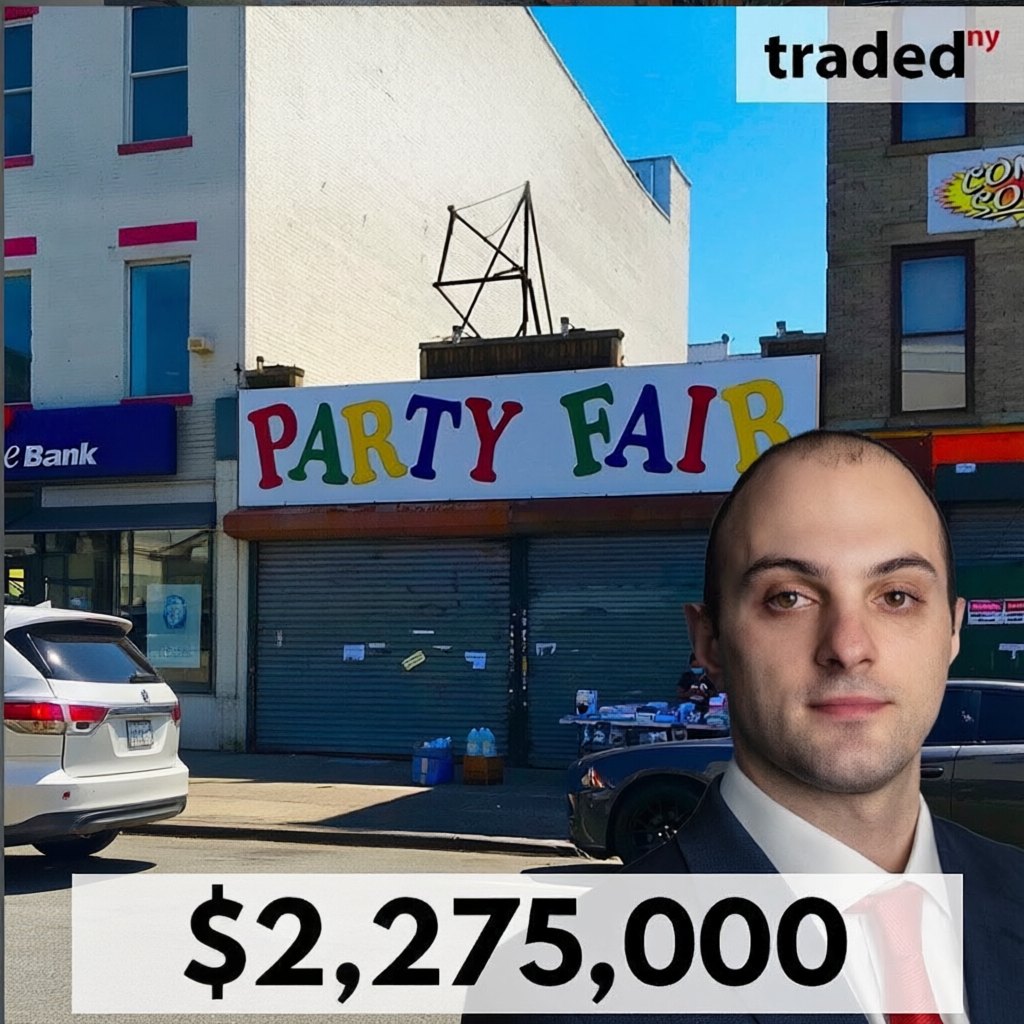
$2,275,000 at $958 Per Square Foot, in the Worst Retail Market in Decades
The Market
Single story retail in Sunset Park, Brooklyn.
The Problem
New York City runs at a one to two percent annual turnover rate, with owners holding for thirty years or more. Sale velocity is extremely low and most owners have no reason to pick up the phone.
The list can't just be owners. It has to be owners who are actually likely to sell.
The Approach
The Result
2,375 square feet of single story retail at $958 per square foot, sold during the pandemic in one of the worst retail markets in decades.
Why It Worked
The building was vacant and carrying a large tax bill, with no income against it. Re-leasing meant putting serious money into a build-out during COVID, when retail leasing had effectively stopped, for a rent that wouldn't have justified it, if a tenant could be found at all.
So the owners weren't sitting on an asset. They were funding one. That's a completely different conversation than the one every other broker was having with them.
That's high probability prospecting. The signal isn't who owns the building, it's what's about to change about owning it.
About
Built by Someone Who Has Done This at Scale

Matt Dittmeier
Founder, TektonScale
My name is Matt Dittmeier. I have personally closed over $100 million in investment sales strictly through cold outbound — no warm referrals, no inbound, no paid advertising. Just a dialed-in system, a targeted list, and a proven process.
I have run outbound teams at Marcus & Millichap, one of the largest commercial real estate investment brokerage firms in the country, and at TrueRate, a national investment sales platform focused on middle-market to institutional-level transactions under a 1B+ AUM sponsor.
Today, that same system books over 100 qualified meetings every month for one of New York City's top investment sales teams, through cold outbound alone — generating over $250M in annual aggregate sales volume. This is not a theory. It is a live, operating result.
Every deal in this document was sourced the same way. Public record, a filter that reads as intent rather than demographics, and direct multichannel outreach. TektonScale is that system, pointed at your market.
Ready to Fill Your Calendar?
Book Your Free Strategy Call
In 30 minutes, we'll map out exactly what a cold outbound system would look like for your offer and your market — whether we work together or not.
No pitch. No pressure. If it's a fit, we'll tell you. If it's not, we'll tell you that too.
Come with one number: roughly what a closed customer is worth to you. That figure decides everything else, and it's the first thing we'll ask.
Book Your Free Strategy CallWe only take on a limited number of new clients per month to maintain quality.